The judging parts are only visible when the **Judge Module** is switched on. See the page [Settings and modules](https://docs.flltools.com/books/flltools-documentation-english/page/settings-and-modules).
### Creating juries A jury is a group of judges in one room who see one team after another throughout the day. In the day schedule every team gets a judging session with one of the juries. [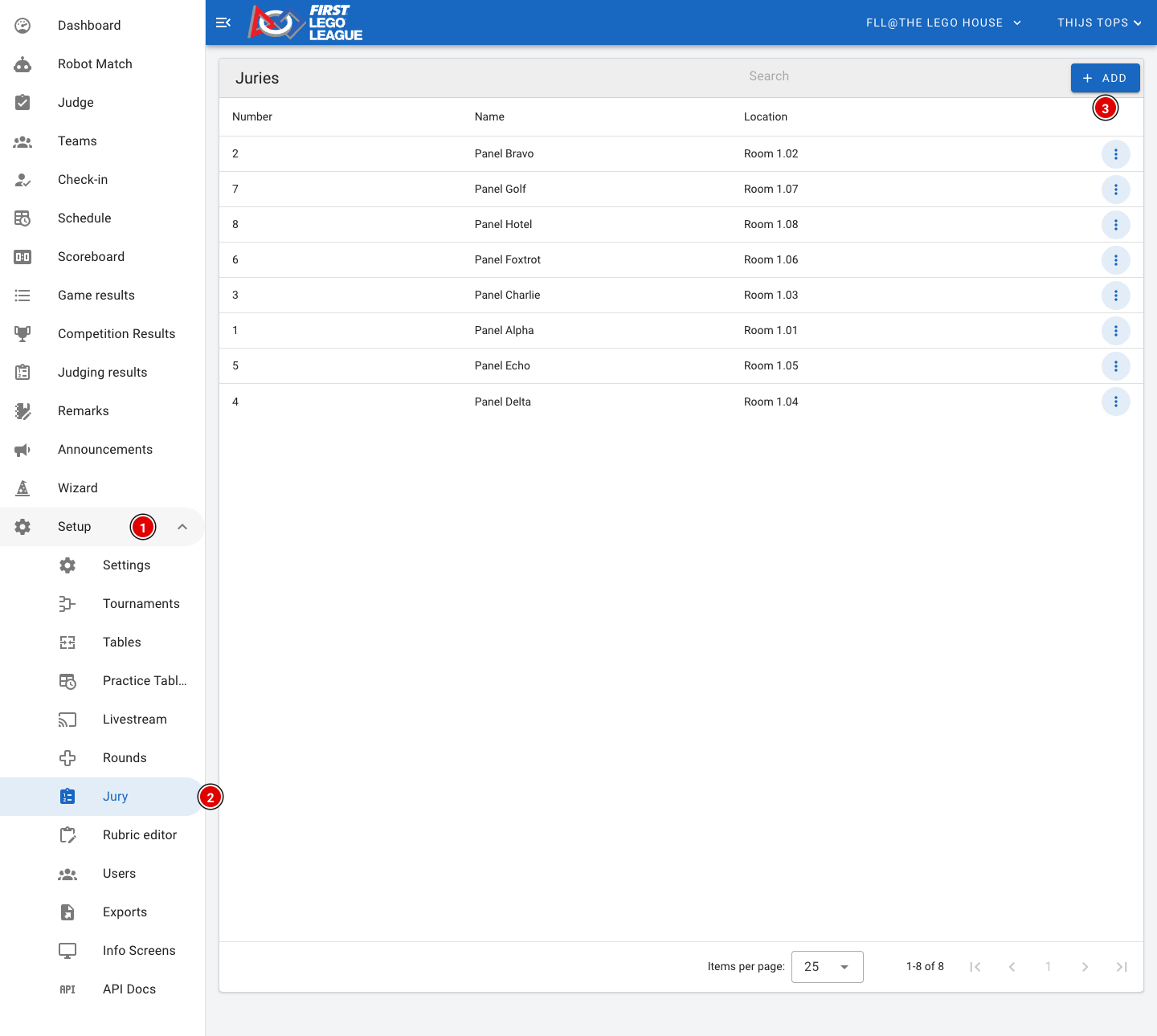](https://docs.flltools.com/uploads/images/gallery/2026-10/jury-01.png) - Go through **Setup (1)** to **Jury (2)**. - You see a list of all juries, with their number, name and location. - Click **Add (3)** to add a new jury. [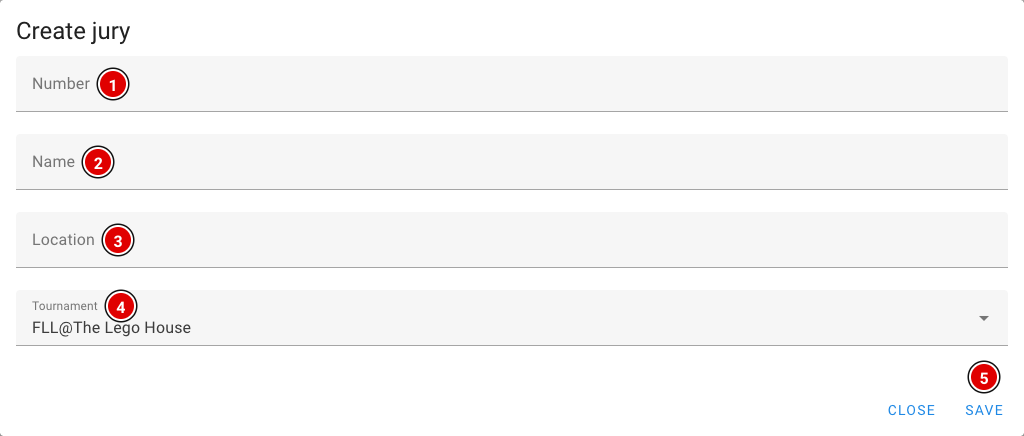](https://docs.flltools.com/uploads/images/gallery/2026-10/jury-02.png) **Number (1):** The number of the jury. Start with 1 and keep counting. The schedule (both the generator and an imported schedule) links the judging sessions to the right jury through this number. **Name (2):** The name of the jury, for example "Jury A" or "Panel Alpha". Teams see this name in their day schedule and on the info screens. **Location (3):** The room or place where this jury sits, for example "Room 1.02". That way teams and volunteers know where to go. **Tournament (4):** The tournament this jury belongs to. Click **Save (5)**. Repeat this until all juries have been created. Through the 3 dots next to a jury you can change or delete it later. ### Rubrics For each team the judges fill in a judging form, also called a rubric. The official rubrics of the season are already available in FLLTools, for example *Innovation Project*, *Robot Design* and the feedback form. In most cases you don't need to change anything here. #### Choosing which rubrics you use For each tournament you set which rubrics the judges use. You do this on the tournament itself: go through **Setup** to **Tournaments** and choose *Edit* for your tournament. [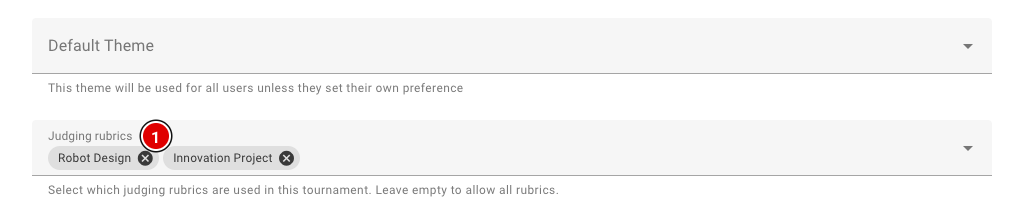](https://docs.flltools.com/uploads/images/gallery/2026-10/jury-05.png) - In **Judging rubrics (1)**, choose the rubrics that belong to your event. - If you leave this field empty, all rubrics are available, and judges will also see rubrics from other seasons. So always choose the rubrics of the current season. - Click **Save** at the bottom. Which rubrics count towards the rankings for the judges' deliberation is set on the page [Competition Results](https://docs.flltools.com/books/flltools-documentation-english/page/competition-results-determining-the-results) (see the Judges' deliberation chapter). #### The rubric editor Want to view or change a rubric, or load a rubric you received from us? Go through **Setup** to **Rubric editor**. [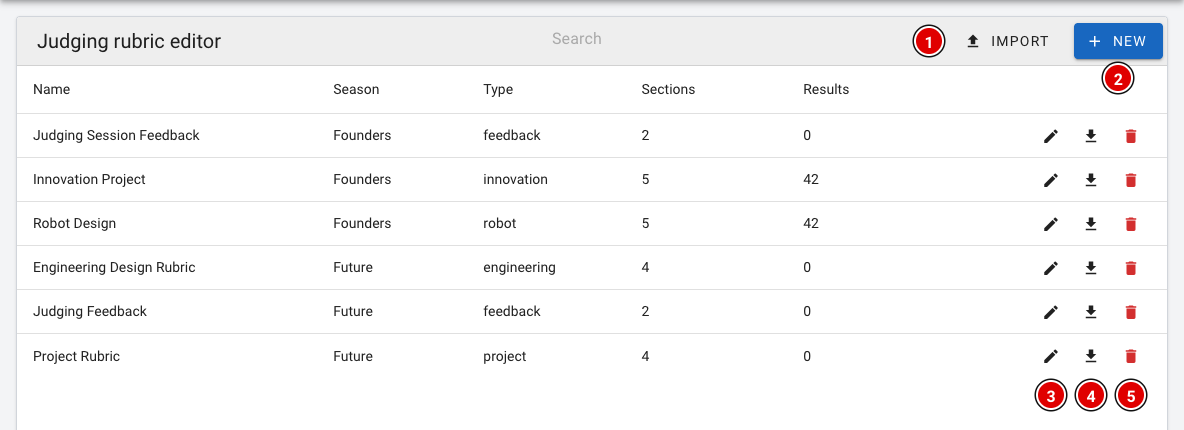](https://docs.flltools.com/uploads/images/gallery/2026-10/jury-03.png) - For each rubric you see the name, the season, the type, the number of parts (*Sections*) and the number of completed forms (*Results*). - Use **Import (1)** to load a rubric from a file (a *.rubric.json* file). - Use **New (2)** to create a new, empty rubric. You then fill in the name, the season and optionally the type. - The **pencil (3)** opens the rubric so you can change it. - The **download button (4)** saves the rubric as a file. Handy as a backup, or to share the rubric with another region. - The **bin (5)** deletes the rubric. A rubric that has already been used to assess teams can't be deleted. [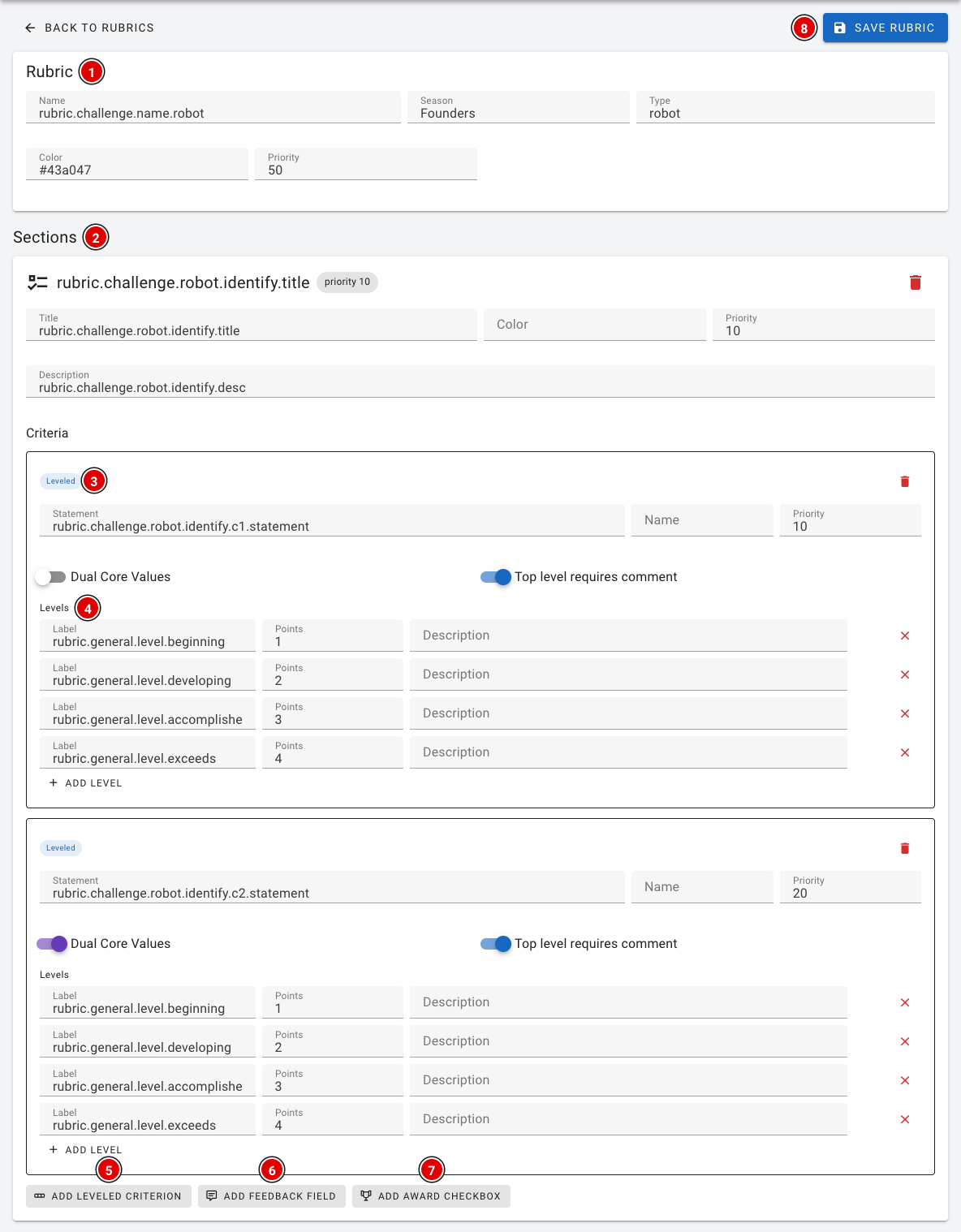](https://docs.flltools.com/uploads/images/gallery/2026-10/jury-04.png) A rubric is built up as follows: - **Rubric (1)**: The general details: name, season, type, colour and priority (the order in which the rubrics are shown). - **Sections (2)**: The parts of the form, such as *Identify*, *Design* and *Iterate*. Each part has a title, colour, priority and description. - **Leveled (3)**: A criterion within a part, with the statement the judges assess the team on. *Dual Core Values* indicates that this criterion also counts for Core Values. With *Top level requires comment*, the judges must write an explanation when they choose the highest level. - **Levels (4)**: The levels the judges choose from (for example Beginning, Developing, Accomplished and Exceeds), each with a number of points. - **Add leveled criterion (5)**, **Add feedback field (6)** and **Add award checkbox (7)** add, respectively, a criterion, a text field for feedback or a checkbox for an award nomination to a part. - Click **Save rubric (8)** to save all changes at once.In the editor you sometimes see texts like *rubric.challenge.robot.identify.title*. These are translation keys: judges automatically see the text in their own language on their screen. So don't change these keys unless you're sure what you're doing.
Don't change a rubric once the judges have started working with it. In doubt? Contact